Saturday, February 13, 2016

My view about- The Novel: Themes, Background and Types


 Novels 

Introduction
        The Novel is an old from of the history of English literature. Novel was started during the time of Elizabethan Age. The first English novel is "Pamela" written by Richardson in 1740. Then the novel rapidly increases in the field of English literature but, the "Novel" as a literature from is new to India. It was partially non-existence in the Indian language. Besides Sanskrit novels, the first Indian languages appeared in 1884 and it is Bankimchandra Chatterjee's. So let us discuss the background, various theme and types if Indian novel. 
     
Background of the Novel  
                         The translation of western classics including novels followed such renderings would take the form of adaption, abridgement or even the bottaminiani translation. However, the real beginnings were with the work of great Bankimchandra Chatterjee (1838-1944), his first published effort Radioman’s wife 1884 was in English. Meanwhile, Raj Laxmi Devi's 'The Hindu wife' was published in 1881 and Khetrapal Chakravarti's 'sarata and Hinduka' in 1895.

1866 to 1886 novels.......
 'Kapalkundala'
 'vishavriksh'
'Anandnath'
'Devi Chaudhurain'

Image result for Rabindranath Tagore image
                    Rabindranath Tagore was a considerable novelist in India. He wrote one or two pieces under the giant shadow of Bakinchandra chatterjee. Tagore achieved his first success with Chokher Bali (1902). Then Saratchandra Chatterjee also went through Bankini's satge and Tagore's stage of imitative writing before our growing then both in his best work in

'Srikanta'
'Grihadaha'
'Bipradar'
'Sesprasna' 

Variety of Theme and Types
                  The novel in India whatever its medium is subject to the same or at least similar discontents and limitation. The novelist is apt either to turn in nostalgia to the past and glorify and idealized it, or turn to present in a zestier or protest is not elegist. There is a universal currency of sex and crime and the explosion of cheap paper backs with their garish Jackets.

            After the independence the more serious novelist has shown, how the joy of freedom have been neutralized by the tragedy of the 'partitiou'. The problem of a choice of subject, the choice of medium, the choice of technique, the choice of audience. This problem of choice at various levels bristal with endless difficult.

Historical Theme
                      History as the theme of creative fiction seems indeed to exercise a special facination for many an Indian novelist of yesterday and today. Ex- Vimala Rama's 'Amiba pali' takes as back to the days of 'Ajatshastra' and tells the story of the vaishali dancer. Who rejected a kimg's love and proffered to enter to Buddha's field. A.S.P. Ayer’s 'Chandkya' and 'Chandragupta' try to recapture life in ancient India. 

Novels of politics
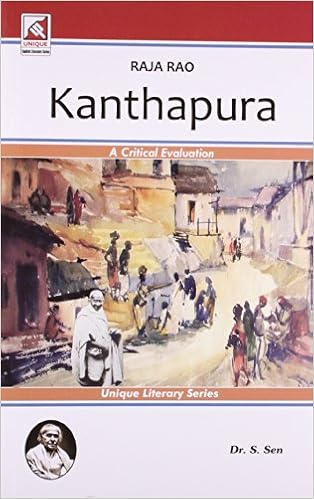
         Some novels covered the second world war period in India, the growing charm between the Hindu and Muslim communities and the Bengal hungers like N.S.Phadke's "Leaves in the August wind?". Two of the best novels about the Gandhian civil also disobedience movement in the early thirties is K.S.Vankataramani's ''Kandan- the Patriot'' and Raja Rao's ''Kanthapura''


Theme of Partitioy
                 One of the most satisfying imaginative records of the partitioy are 'Khushwant singh's' ''Train to pakistan'' (1956). The whole horror is there, but humanity and compssion are there too. In Balachandra Raja's ''The dark dancer'. We also get glimpse of partition humors. As Devendra Satyarthi puts out.....

"Literature based on hate and prejudice can really be great. It was a draw of degradation and cause a draw of human decay. Showing how the minds of the two communities were of the two-nation theory''.

Novels of social criticism
               Like to the historical novels, the novels of social criticism and social protest also farinas distinctive group. Rameshchandra dutt's "The Lake of palurs", is a study of social life in Bengal towards the close of the 19th century. Ramakrishna's ''The Dive for Death'' is women around certain superstitions that make coward of the character.

Style and technology of Indian Novels     
             The Indian novelist is not usually attracted to the new techniques in plotting, narration or characterization. As a rule descriptions of sex life used to be prudish but the toriting in less inhabited in novels published in recent years. The stream of consciousness method of narration is hardly tried by the Indian novelist except G.V.Desni's ''All about H.Hatterr'' and 
Anita Desai in 'peacock and vices in the city'.

              It was mentioned earlier that, since Baking’s time, the Sanyasi has often figured in Indian novels. In Bhabani Bhattachary's 'kalo', 'The Bogus swami' takes advantage of human gullibility’s. In R.K.Narayan's ''The Guide''- Raju is a swami by mistake.

Conclusion
           Numberless novels are published and they are clearly of unequal quality. The best novels are not many, but there are some very good novels. Thus the Indo-Anglican literature continues to grow and flourish these entire novelist and many have considerably enriched. Indo-Anglican fiction "It has, indeed, bright future''  


My view about the various types of vowels


Introduction
                English language there is 20 vowel sounds. 12 are pure 'Vowels' and 8 'Diphthongs' four of the 12 pure vowels of English are front vowel. Three of the 12 pure vowels of English are Central vowels and five of the pure vowels of English are Back Vowels. There is discussing of the vowel.
            In English are mainly two types of vowels
Rounded vowel
UnRounded vowel

Rounded vowel
          During the articulation of some sound the shape of lips is rounded such vowels are called "Rounded vowel"

UnRounded vowel
              During the articulation of some vowel sound the shape of the lips is not rounded such vowel are called "Unrounded vowel" Three Unrounded vowel.


Ø     Front Vowel
Ø     Central Vowel
Ø     Back Vowel
           Discuss the several of vowel.

Front Vowel

                    /i/
                During the articulation /i/ vowel sound. The rear position of the front of the tongue is raised in the direction of the hard palate to a height just about half close position. The tongue is alx. The lips are loosely spread. If can be describe centralized front unrounded vowel just about half-close position.
           It can be occurring, medially and finally in words as:-

/it/-it, /Bit/-Bit, /city/-city, /fit, pity

                    /i:/
          During the articulation of /i:/ vowel sound. The front of the tongue is raised in the direction of the hard-palate to a height very near to close position. The tongue is tense and the lips are spread. So it can be described as front unrounded vowel near close position.
           It can be occur initially, medially and finally in word as

/i:t/-eat, /bi:t/-beat, /Bi:/-Bee, /si:/-see

                    /e/
              During the articulation of  /e/ vowel sound. The front of the tongue is raised in the direction of hard palate to a bright between half close and half open position. So it can be described as front unrounded vowel between half close and half open position, The tongue is tense and the lips are loosely spread.
            It can be occur medially in words as
/eni/-any, /Egg/-Egg, /Bed/-Bed, /Beg/-Beg

Central Vowel

                 /^/
                 During the articulate of /^/ vowel sound. The central of the tongue (The midpoint of the front of the tongue and back of the tongue) is raised in the direction of the roof of the mouth that is between hard palate and soft palate to a height. Just about half open position the jaws are wide and the lips are open. It can be described as the central rounded vowel just about half pen position.
                It can be occur initially an medially in words as

/^p/-up, /c^p/-cup, /B^t/-But 


Back Vowel

               /a:/
                During the articulation of/a:/ vowel. The back of the tongue is raised in the direction of the soft palate in fully open position. The jaws are wide and lips are naturally open. This so can be described as the back open unrounded vowel.
              I can be occurs initially, medially in words as:

/a:r/-Art, /a:r/-car, /h a:t/-heart

                     /U/   
               During the articulation of /u/vowel sound. The back of the tongue is raised in the direction of the soft palate to a height just about half-close position. The tongue is /ax/. The lips are rounded so it can be described as the back rounded vowel just above half close position.
          It can be occurs initially and medically in words as:

/Ful/-Ful, /Sugar/-Sugar,
/Put/-Put

                     /U:/ 
                  During the articulation of /U:/ vowel sound. The back of the tongue is raised in the direction of soft palate the tongue is tense. The lips are closely rounded. The vowel can be described as the back rounded vowel just almost near close position.
        It can be occurring initially, medically and finally in words as:

/eid3/-Age, /pein/-pain,

/Seil/-say

My view about the Poets of Indian Writing in English


Introduction
                   Poetry comes first; then comes prose. It in poetry that the post developments. In the fifties arose school of poets who tried to turn their backs on the romantic tradition and write a verse more in turn with the age, its general temper and its literary ethos. By the fifties the ''New Poetry" had already made its appearance. In 1958, p.Lal and his associates founded the writer’s workshop in Calcutta which soon become an effective forums for modernist poetry. So, let's discuss four wiles tones of Indian in English.

Toru Dutt

                 Toru Dutt was known to us by her book
"The ancient Ballads and Legends of Hindustan" Which also contains her smaller pieces. Toru Dutt was a genius. In her short life span of 21 years, She created a body of poetry which in the world of Milton,
"The posterity will not willingly let die"

                  French poetry had exercised such a great fascination on the young Toru that she rendered 200 poems of French poetry; include so poems of victor-Hugo into English. Toru's French novel
 "Le journal de mademoiselled' Arvers'' was a great surprise to French critic.  

                        Although a convert to Christianity, Toru Dutt had imbibed the ancient spirit and lives of India. She was born artist. Toru had an eye for the beauty and grandeur of nature. Her scenes and landscapes are supers. The opening stanza of "our casuarinas Tree" 
or else the master piece in.......

"baunarec"             
 "A sea of foliage girds our garden round
 But not the sea of dall unvaried green...."

                         Toru Dutt's ideal was to interpret the east to the west and she succeeded: Toru was a precious girl, with a touch of genius: Edmund Gosse remarks,

"The pathos of unshed tears, which we feel when we read of Joan of arc, of Keats, of Chatterton extends to try and her short life of ecstasy"  

Sri Aurobindo Ghosh

                      Sri Aurobindo was a versatile genious and an intellectual gaunt. His outstanding achievements in prose, poetry and drama rank him as the greatest figure of Indo-Anglican literature. Aurobindo holds the for most rank among the Indian writers of English verse. Not many contemporary poets, when among 'Englishmen', display his skill and ease in handling the blank verse. He is indeed a poet of remarkable power and range. His 'Savitri' divided into 12 books and 49 cantos were conceived on an epic scale.

                         Aurobindo succeeds in finding the language of the identities and even when he uses symbol and figure; it is in a different fashion, less a veil, more as a real correspondondence. According

Prof. M.K.Naik.....
"Aurobindo is a poet of varied achievements in lyric, narrative and epic modes"


Sarojini Naidu

                  Another gifted poet of Indian verse was sarojini Naidu, the "Nightingale of India". Here career as poets began with the publication in 1905, at her 26th years of "The Golden Threshold" it was followed by two more volumes.........
"The bird of times''   and   ''The broken wing"
 Sarojini Naidu was reserved the task of interpreting the heart of India to western, readers to a "Buddha seated on a Lotus" is proof of it......


"The wind of change forever blows across the tinsel of our way to-morrow unborn depose the sorrows of our yesterday"  
      But she had "A craving for Beauty". Her emotions were easily stirred by the sight of beauty of color or sound of nature and man, music and dance, mysteries of peace and tranquility of gardens. Sarojini Naidu's poetry is essentially lyrical. It is marked by a sweet melody, a touch of romance and the vision of a colorful world. The subject of her poetry often bears relation today traditions and customs, romantic place and places.

Rabindranath Tagor
                               
                         Rabindranath Tagore' many sides achievements almost take one's breath away. Lyrics, poetic plays, plays of ideas, social plays, short-stories, essays in criticism, philosophical essays, autobiographical fragments, letters, address, educational dissertations- These have interruptedly hawed from his pen.

                    He was primarily a Bengali writer; the only poem he composed originally in English was ''The Child", the written towards the end of his life. Tagore’s master piece "Gitanjali" was published in England with W.B.yeats introduction, presently in 1913, Rabindranath was awarded the noble-prize for literature. Thus, the award was a major land work in the history of Indo-Anglican literature.

Conclusion   
                      In poetry the most sticking common note in all the Indian literature is romantic fervor and passion and an exaggerated subjectivism, where these have freed themselves from the traditional, mystical, devotional pose and context. European nature poetry has also been thoroughly imbibed and assimilated. Where Tagore nature lyricism or philosophical poetry has provided the model, whether in Bengal in or in the other provinces.   


My view about novel the" Heart of Darkness" with particular reference to the mode of narration init.


Introduction

            "The Heart of Darkness" written by Joseph Conrad was a born on 3 December – 1857 or died on 3 August 1924. ""Heart of Darkness"" 1899 is a novel by British novelist Joseph Conrad. He was considered an early odernist, though his works still contain elements of nineteenth-century realism.  Marlow is a narrator of the main story and he is supremely important in the novel which deals with his experiences in the Congo. Heart of Darkness is a compact masterpiece.

Joseph conrad  


                  It would be unsounded criticism to say that this novel is badly constructed or that it is structurally defection. Except for the faulty technique of narration which Conrad has employed here, and which he has employed in certain other novels of his also, more into theadventure. Furthermore, the story tends to change more and more from a physical exploration to a moral and mental exploration. The search for the heart of darkness becomes a search into the man's heart represented by Marlow's search for Mr.Kurtz. With ill Europe in his heredity, had gone to Africa with the highest motives for he enlighten of the ignorant and backward natives, but he had ended here as one of the dark deities of the very people whom he had wanted to civilized. The power of the story, says a critic from its method of narration.

Marlow 

                   The method of narration in "Heart of Darkness" comes as big disappointment. The novelis a fascinating one. It is a spell-binding novel. The story, which it unfolds, exercises a magic effect upon us. The history grips our minds with its intensely dramatic situations and with its stirring and exciting events. The story has suspense; it has mystery and has depth and profundity too. What upset us is the mode of narration. Marlow alone would have been sufficient to distance the reader from Conrad, if such a distancing was necessary. The introduction of another narrator, besides Marlow is a most clumsy device for which we as readers cannot forgive Conrad.

Friday, February 5, 2016

My view about Northrop Frye: The Archetypes of Literature


Northrop frye

                          
                              Archetypes criticism is a type of critical theory that  interprets the text focusing on recurring myths.  There are  imaginative or perspective of the way.He says that to archetypal critic has to be in held of whole nature and universal forms to human personality.'' Those reverberations as symbols or manifestations of universal human conflicts and desires.” 

               Archetypes story is not perfectly matches and some story are divided into other part. Northrop Frye gives this analogy to prove that as science – physics has grown today  as a separate branch of science. There concept are very different or perspective of the way. Criticism is organized of  knowledge and we can started to progressively. criticism is the only subdivision of literature, and so that, for the systematic organization of subject.There are very different or moral of the way, we can say the dominated of the criticism. If such a pattern exists, then criticism would be to art what philosophy is to wisdom and history to action.


                       We can see that in political and social images and grave diggers are marginalized in society or we can say that society are very powerful or contrasted of the way,  and also know that pseudo biological conception of them and genres as existing independent creation in this scene. There are critically view on a different or not easy.  The music, painting, rhythm and pattern there are all art may be conceived both temporally and spatially. We know that rhythm when it is temporal and patterns it is spatial. In time to be in past, present and future  as to music..There are most important of the past or present time or they can have immoral aspect of the way.  We may call the rhythm of literature the narrative, and the pattern, the simultaneous mental grasp of the verbal structure aspect of the way. 

 The Hero Poem 
Then he goes to his chamber, a grief-song chants 
alone for his lost. Too large all seems, 
homestead and house. So the helmet-of-Weders 
hid in his heart for Herebeald 
waves of woe.  


                           " poetry can only be made out of other poems; novels out of their novels.... All this was much clearer before the assimilation of literature to private enterprise concealed so many of the facts of criticism." 


My view about -Culture and Anarchy Chapter-1 “Sweetness and Light” by Mathew Arnold


                                     “Sweetness and Light” is a first chapter or they are clarify to a Mathew Arnold. He is English and Victorian poet or write, who was also an inspector of schools, popularized Swift's phrase as the theme and title of the first chapter of his celebrated book of cultural criticism, "Culture and Anarchy". This age is a very  popular by its material prosperity, political awakening. He wrote a book culture and Anarchy use of a ancient Greek. The main point of a society or curiosity, and they kind of a very sophisticated of a way According to him a curiosity is desire.

                            Curiosity is a lead to us a culture, and  It is a natural place to a curiosity. Culture and Anarchy book is a concept very clearly or simple disaster. They can have a social or political issues to the Sweetness and light is created to Mathew Arnold. He is a view social aspect of culture .It is a person of culture, and who work in the society for its betterment. We can the direct the inspire of the man a religious, they can have use of social, political, religious, poem is a create to a culture anarchy. There society are create to human natural power of a way. 
        
                          Arnold clarify to a connection between culture and idea of sweetness and light. Arnold is a Greek man of culture is main character of a essay. The character of a main culture is modally by religion and poetry. Culture has one great opinion, the passion for sweetness and light. Arnold is a create to a new art, poetry, society construction or they can have a power full or domestic literature. Culture is a main character of the sweetness and light, culture is a different form of the way. Marlow is a clearly to the culture is a connected to the light. So, his pursuit of perfection is sweetness and light.            


Tuesday, February 2, 2016

My view about the story "Quality"


About author

           John Galsworthy (14 August 1867-31 January 1933) was a English novelist and playwright. Notable works include the Forsyte Saga and it’s sequels. He won the Noble prize in Literature in 1932. Quality is a very famous story by John Galsworthy.

   “Feeling himself into the heart of my requiremet”
   “His fit was to die”


           When the story starts we the reader are presented with description of the shop of the protagonist Mr. Gessler. Which is in the west end Gessler and his elder brother owed the shoe shop. In the first few lines of the story we come to know the kind of skill Gessler would have passed. The narrator puts the skill of Gessler in his words by saying
 “It seeed so inconceivable what he made could ever have   failed to fit”   
     From this dialogue only we can make out Mr.Gessler would really dedicated towards his job of shoe making.
    His shoes are unmatchable and incomputable from the dialogue of narrator we can guess that Mr. Gessler also must be aware of his skill but inspire of having unmatchable skill. He never proud on himself or skill which makes him adorable.    
           Narrator himself was confused that how one can make such beautiful eye and perfect shoes and out of curiosity the narrator ask Mr. Gessler that to make shoe exactly according to the customer need is awfully hard job Mr. Gessler beautiful replied
                   “It is a art”

                 This dialogue of Mr. Gessler suggest, that he has never taken his profession of shoe making as a business instead he always believe that
                “It is a art”

                  Gessler is elder brother and he always had that respect in him for his brother and therefore any decision or final words have to be said to the customer Gessler would say
              “I will ask my brother”

                      Which shows not only his respect for his elder brother but he also had childlike innocence in him and due to the innocence there was absence of pride in him.

                If we notice the dialogues of Mr. Gessler we realize that he and his brother has German accident as they could not speak accurate English. Mr. Gessler and his brother they both owned a shop in Landon and they always believe in simplicity the trust in their quality and therefore the never felt need of advertising there shop. They just put one board on their shop “Gessler brother’s”. Those who know that serve best quality boot remain there royal customer


                    The narrator than describes the shop of Mr. Gessler uses the symbolism such as “the church” to show how the shop has big value to Gessler brothers always gave priority to the quality of shoes. And therefore it always feel different from other shop when any person in their shop. As one would feel like they have entered in the church as it gives divine feeling.

               When the narrator would went in the shop he would notice the behavior of Mr. Gessler who just ask his customer about their need and requirements and without pay much attention to the customer he starts preparing to full-fill their requirements. Once when the narrator complains regarding the crack boots who was made by Mr. Gessler was very much shocked and disappointed. As he was so sure for his skill of making shoe but then we wit-new his humbleness when he deal with narrators complain. He politely says,

     “Zend den back!” (Send them back)

                 He closured the narrator if he will try his best to mend the boots but if he feels or can do nothing with the boots. He will take the price of from the built.

         Once the narrator went to Mr.Gessler shop absence minded the narrator was having boots from other shop and he had some problem with those boots. As he was not comfortable wearing it when Mr.Gessler show the boots he at once remark
     “Dose are not my boods” -(Those are not my boots)

        Than the narrator said it was the first and last time he ever heard Mr.Gessler discussing the condition and hardship of his treed”

                        Mr.Gessler discussion about how big firms plan there market storages, all they do is advertisement in Mr.Gessler word if we put he said

“Dey get id by advertisement, nod by work,
   Dey dake it away from us, who lofe our boods”


                     This big firm attract customer by publishing advertisement they do not care for the ‘Quality’ of their work. They snatches away to customer who believe in “quality work” not advertising their work. Mr. Gessler bust out his disappointment that at present is left with no work and every year it gets less.
                       
                   Than the narrator about his next visit to Mr. Gessler shops this time he observed some unexpected changed in the shop of Mr.Gessler from the dialogues of Mr. Gessler. The narrator and the reader come to know that their half of the shop was take over by a big firm and due to his elder brother who also use to make good boots died. He could not bear the owner ship of some other firm own there shop and out of that disappointment in grief and died. The narrator could not look into the eyes of Mr. Gessler as if he was also feeling the absence of his elder brother and therefore he ordered three pairs of boots though he needed to pairs of boots only.
                        The narrator went to abroad and for long period he was not in London when he was in abroad he uses to be Mr. Gessler boots only as his boots fitted like anything. After a long time he returns to London and visited Mr. Gessler’s shop again he was wearing boots of Russian leather and this time the narrator ordered another four pairs of boots? The narrator receives the parcels which contain four pairs of boots. And this time it again pleased the narrator because its shap, its fit, its finish, its quality of leather were the best he had ever made. This was the last time the narrator receive boots from Mr. Gessler because when the narrator went to Mr. Gessler’s shop to tell him how splendidly the new boots fifed. But for his great surprise his name from that shop was gone his shop entirely take over by that firm.

                    He inquired about Mr. Gessler one young English man informed the narrator that Mr. Gessler has died. The narrator also came to know the reason of his death which was “starvation”
.
         Mr. Gessler died due to starvation because during his last days he had very less money to pay the rent and whatever money he had went in rent and leather. He didn’t care of himself and dedicated all his life and money to make good boots only. Before he died he completed the order of the narrator without taking care of himself.